

How to calibrate a lawn spreader
Find the right bag setting for your spreader, know when to check its output, and follow a simple calibration example.
Use the bag’s setting for your spreader
Find your exact spreader model on the seed or fertilizer bag, set the dial as directed, and follow the spreader manual’s walking pace and pass spacing. Check whether the instructions are for a new lawn or overseeding.
You do not need to turn every application into a weighing exercise. Check the output when your model is not listed, the material runs out much sooner than expected, or the manufacturer calls for calibration. Follow any mechanical setup checks in the manual too.
Calibration simply means checking how much comes out over a measured area. This method is for dry grass seed and plain granular fertilizer; weed-and-feed and other control products have additional label requirements.
Mark a test strip
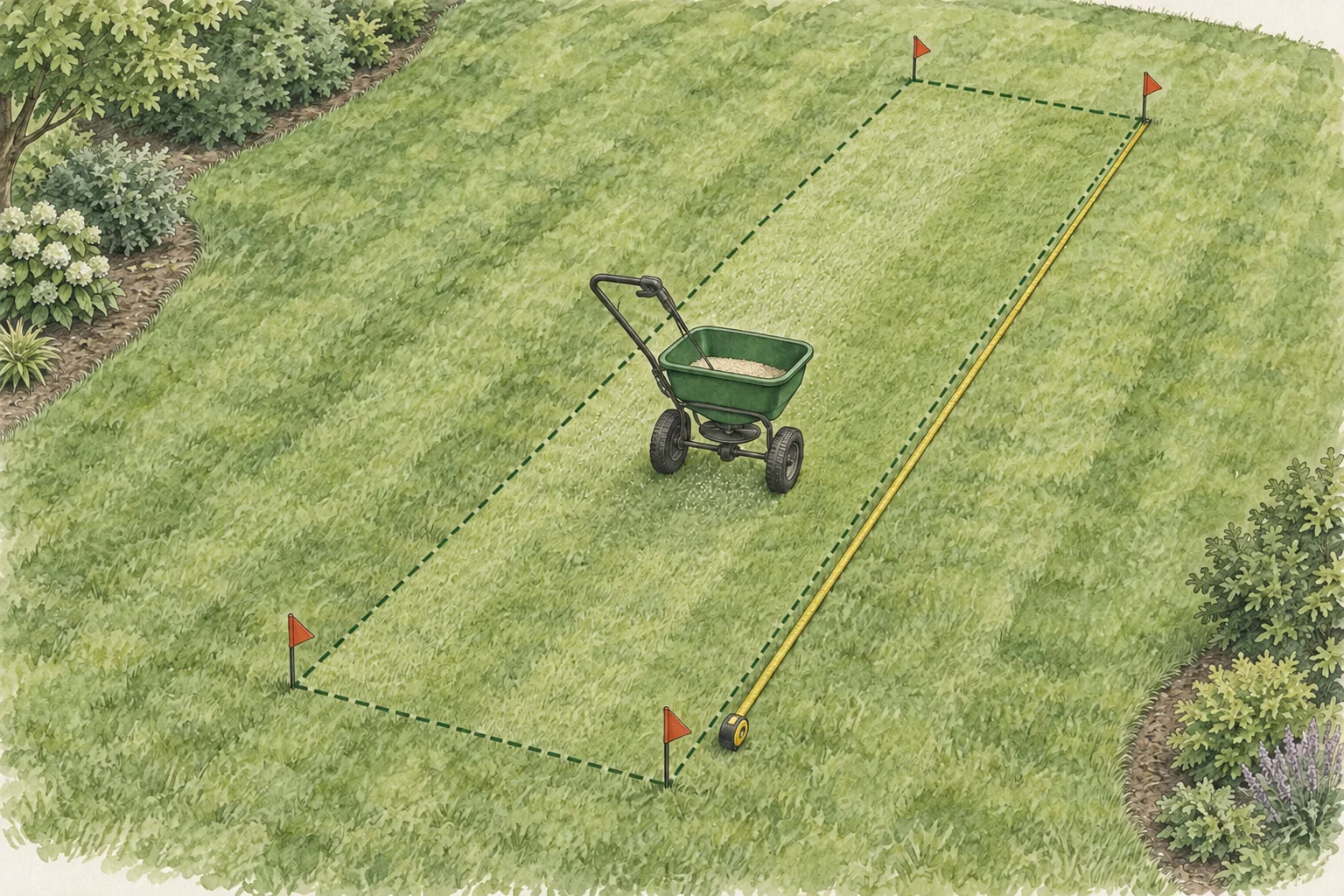
You need a tape measure, markers, a bucket, and a scale. Use the actual product you plan to spread. Check that the hopper is dry and closes fully.
- Drop spreader: use the width of the actual discharge pattern, not the outside width of the wheels.
- Broadcast spreader: use the recommended spacing between passes for that product and machine. This is the effective width—not the distance the farthest granule flies. The lighter edges of a broadcast pattern need overlap.
If the pass spacing is unknown, ask the manufacturer before calculating the test area.
Mark a straight strip on a level part of the lawn. Test area = effective width × distance walked. Keep track of this strip so it does not get a second full dose later.
Weigh, walk, and weigh again
- Zero the scale with the empty bucket on it. Weigh a known amount of your product, then load it with the spreader closed.
- Use the recommended starting setting—or a low opening if none is provided. Walk steadily, opening at the start line and closing at the finish. Keep the hopper closed while stopped or turning.
- Return all remaining product to the same bucket and weigh it. Subtract the remaining weight from the starting weight.
That difference is what you applied. Avoid windy conditions, and recover any spill before it distorts the result. Do not wash stray granules into a street or drain.
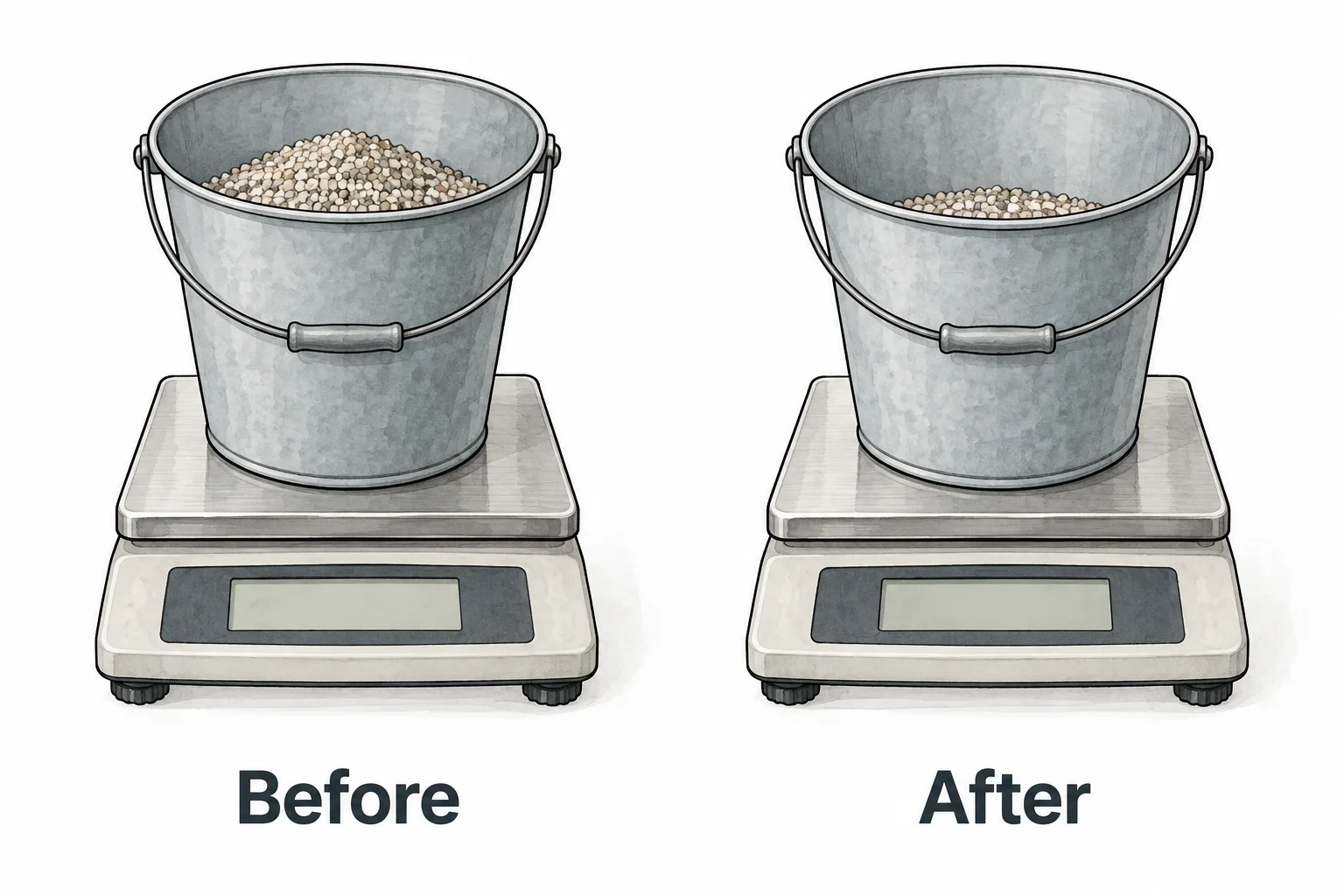
Example: 1 lb on a 250 sq ft strip
Suppose your bag calls for 4 lb per 1,000 sq ft. A 25 ft strip with a verified effective width of 10 ft covers 250 sq ft. These are example numbers, not universal settings.
| Check | Example |
|---|---|
| Verified effective width × test length | 10 ft × 25 ft = 250 sq ft |
| Target on that strip | 250 × 4 ÷ 1,000 = 1 lb |
| Measured output | 3 lb loaded − 2 lb remaining = 1 lb |
More than 1 lb came out? Reduce the opening. Less than 1 lb? Increase it. Repeat on a fresh strip at the same pace and spacing. Count every test toward the lawn’s total application; do not give tested strips another full dose.
If you choose two half-rate coverages, each needs half the product rate—not simply half the dial number. For fertilizer, calculate pounds of product, not pounds of nitrogen.