
How to spread compost on your lawn
Topdress your lawn without burying the grass. Find the right compost, the amount to order, and the tools that make spreading easier.
Use fine, screened compost
Spreading a thin layer of compost over existing grass is called topdressing. It adds organic matter and nutrients without replacing the lawn. Ask for finished, finely screened compost for lawn topdressing—not wood-chip mulch or a load of chunky garden compost.
A soil test helps establish whether your lawn needs it. Compost contributes nutrients, so account for those in your fertilizer plan rather than automatically adding both every year.
Plan for a ¼-inch layer
For an existing lawn, spread no more than ¼ inch per application. Measure the grass you will actually cover, leaving out beds, paths, and the driveway.
For 1,000 sq ft, that is about 21 cubic feet of compost—roughly 0.77 cubic yard, or eleven 2-cubic-foot bags. A 5,000 sq ft lawn needs about 3.9 cubic yards at that depth; ask a local supplier about bulk delivery before hauling dozens of bags.
To calculate another area: square feet × depth in inches ÷ 12 = cubic feet. Divide by 27 for cubic yards. Measure your lawn on the satellite map to get the area.
How to spread it
- Mow and clear the surface. Remove leaves and heavy clippings so compost can reach the soil. If the lawn also needs core aeration for compaction, do that before topdressing.
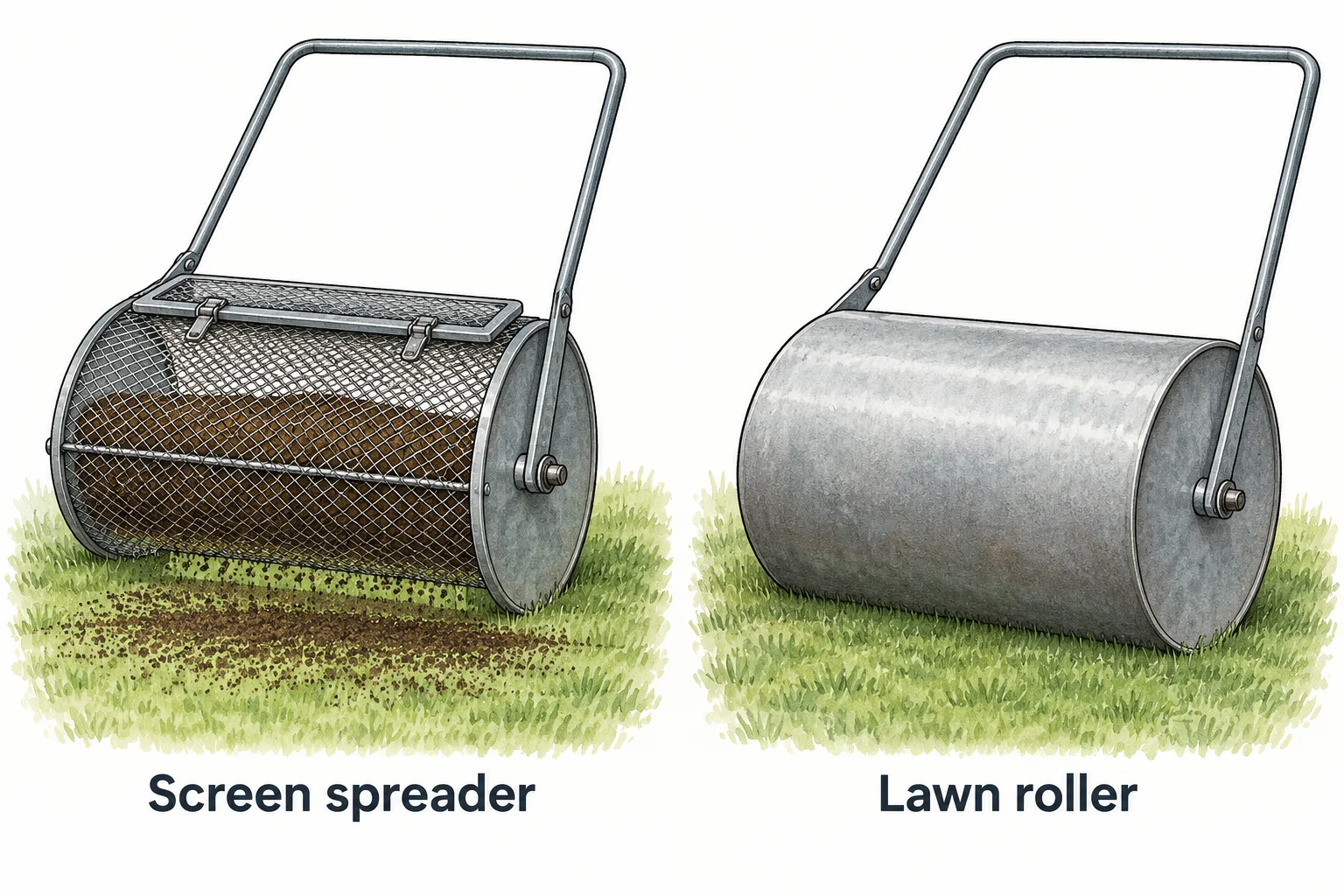
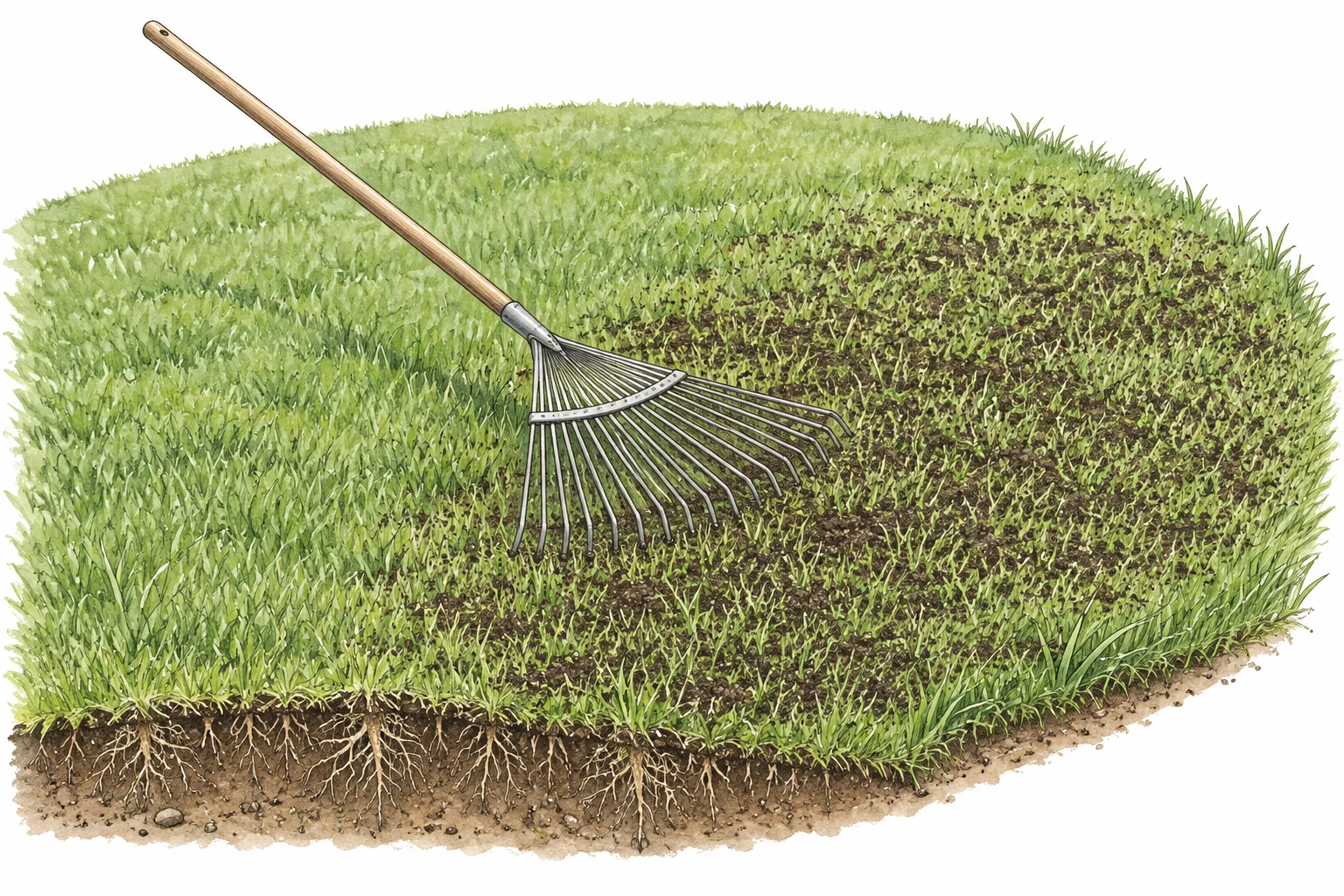
- Start with a small section. Scatter compost with a shovel and spread it with a leaf rake, or use a mesh-drum spreader for a larger area. Break up clumps; do not leave piles sitting on the grass.
- Work it between the blades. Use light rake passes to distribute it evenly. Keep the grass visible and the layer at or below ¼ inch. If you have buried a patch, rake the excess onto an uncovered section.
If you are overseeding too, expose soil for seed contact before adding a thin cover. Compost does not replace watering: follow the new-seed watering schedule as the grass establishes.
A rake for patches. A screen spreader for more lawn.
For small repairs, use a shovel and leaf rake you already own. For repeated topdressing over a larger lawn, we recommend the Landzie 24-inch compost spreader. Its mesh drum distributes fine compost while keeping coarse pieces inside, making a thin layer easier to spread.
Use loose, screened material that can pass through the mesh. Empty retained chunks separately rather than tipping them onto the lawn. For a one-off project, borrowing or renting this type of spreader may be enough.
A regular seed spreader is not suitable for bulk compost, and a solid lawn roller cannot spread it.