

How to level small low spots in your lawn
Choose the right soil, fill small dips, and smooth the lawn without burying the grass.
Check how deep the dip is
Lay a straight board across the low spot and measure the gap beneath it. A shallow dip needs a light layer of soil; a deeper hole needs soil beneath the grass.
If the spot keeps sinking or holds standing water, find the cause first. Adding soil will not necessarily fix drainage, especially near a house.
Use fine, screened topsoil
Ask a landscape supplier for screened topsoil similar to your existing soil. It should crumble easily, without rocks, roots, or large clumps.
Sand alone is not a general fix for clay lawns. Compost breaks down, so it is better for improving soil than filling a lasting low spot.
Measure the dips—not the whole lawn
Measure the repair area on the satellite map and check its depth on site. For a small patch, measuring its length and width also works.
Check the depth at several points. Use the average fill depth, not the deepest gap, to estimate soil. A 10-by-10-foot area is 100 sq ft; here is what it takes at two average depths:
| Average fill depth | Volume | 1-cubic-foot bags |
|---|---|---|
| ¼ inch: thin topdressing | 2.08 cu ft | 3 bags |
| 1 inch: deeper repair beneath turf | 8.33 cu ft | 9 bags |
For your own area: square feet × average depth in inches ÷ 12 = cubic feet. Round up when buying bags, but save unused soil rather than piling it on.
Fill the spot and help it recover
Work while the grass is growing, not during drought or when the ground is waterlogged. Mow normally and clear debris first.
- Shallow dip: scatter soil and rake it between the blades. Add no more than ¼ inch at a time, keeping grass exposed. Let it grow through before adding more.
- Deeper hole: cut and lift a flap of turf with its roots attached. Add soil underneath, settle it gently, and replace the flap level with the surrounding grass.
Water the repair. Keep lifted turf moist while it roots again, and seed any bare patches. Check for settling after watering. Skip the heavy roller—it compacts the soil instead of filling low spots.
A rake may be all you need
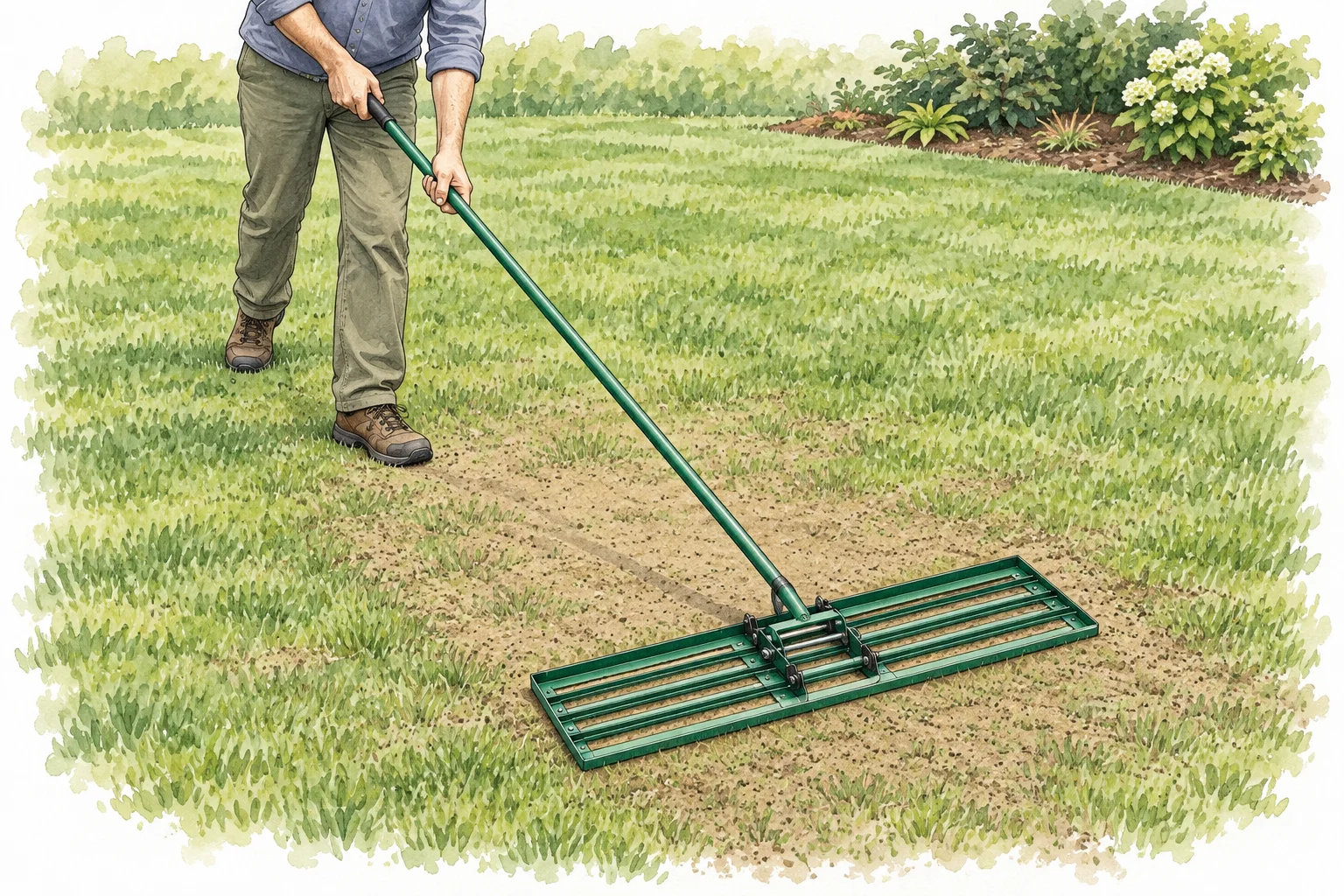
A shovel and garden rake are enough for one small spot. For several dips, the Landzie 36-inch leveling rake makes smoothing loose soil easier with its wide, flat head.
Covering a larger area? The Landzie 24-inch compost spreader can distribute dry, finely screened material. Test a small load; wet or coarse soil can clog the mesh. It spreads the soil; the rake does the leveling.